


What Is Clipping Marketing?
“Clipping” is the practice of paying creators (clippers) to cut a brand's long-form content into short clips and post them across TikTok, Reels, and Shorts, bought on a pay-per-view or cost-per-thousand views (CPM) model. Clippers manage some of the most viewed social handles on the internet. Clipping gives brands a way to put their content in front of millions of consumers in the format those consumers prefer. CPMs are a fraction of the cost of traditional ads, and viral clips that keep racking up views after the campaign push effective CPMs (eCPMs) even lower. That makes clipping an optimal tool for cost-effective reach, creative testing, and consumer insight.
A few pieces of source content, a budget as small as $2,000, and the potential to generate millions of views on demand: no large media team, no production infrastructure, and no guesswork. You're not buying ad inventory; you're buying access to the algorithms and the people who know how to work with them.
Why Clipping Is Growing So Fast
Over the past few years, clipping has gone from a niche creator hustle organized on private Discord servers to a real line item in brand marketing budgets, with public marketplaces like Content Rewards and Vyro powering the ecosystem. A few forces have driven its rapid rise:
- Social platforms prioritize short-form video: TikTok, Instagram Reels, and YouTube Shorts have changed how we all consume social media.
- It's cost-effective: eCPMs often come in at less than $1.
- It's higher-intent: Algorithms pre-qualify the viewer.
- It's social-native: Clips are delivered from the handles that already dominate social feeds.
- It scales fast: Hundreds of thousands of clippers are available on demand.
This combination of low cost, high intent, and rapid scalability is why industry leaders have started writing big checks. Movie and gaming studios, streamers, and even CPG brands have run clipping campaigns with budgets in the hundreds of thousands of dollars in 2026. And as usual, when the biggest players move first, everyone else follows. Clipping is quickly becoming one of the most efficient ways to get eyeballs on a product. But “effective at getting eyeballs” and “safe to scale” aren't the same thing, and how quickly that gap closes will decide the future of clipping.
The Fork in the Road: Two Futures for Clipping
The Good Ending: The Market Gets Sophisticated
Clipping excels at generating views, engagement, and brand awareness, but has historically been weaker at generating conversions. That's already starting to shift. Agencies increasingly integrate affiliate links, direct calls to action, and more aggressive, sales-oriented formats instead of pure view-count campaigns.
Simple economics is pulling this shift forward: traditional marketing costs keep climbing, and brands are actively looking for alternatives. Even if direct conversions aren't your goal, organic, algorithm-matched views of your own product are about as good as it gets for cutting through the thousands of ads competing for attention every day.
Market sophistication is healthy and good for every client: competition is what drives higher-quality output and attention to detail.
In this scenario, the market keeps growing. Agencies, brands, and clipping marketplaces hold clippers to higher editing and posting standards and demand anti-botting and view-traffic verification on every clip. The quality bar goes up, and that in turn supports higher CPMs and long-term retainer relationships for the clippers who can meet it.
The Bad Ending: A Few Bad Apples Spoil the Bunch
The alternative future is uglier, and some marketplaces have already had to change their focus entirely because of it: bots and fake views are quietly creeping into the clipping industry.
Our own data puts fake views at 5-40% of total views across a typical campaign. In dollar terms, on a $100K clipping budget that's $5,000-$40,000 going to impressions that never actually took place. Evangelist was created to tackle this problem. We break down how botting works, how it can be detected, and how brands can make sure they pay only for verified views in How We Keep Botting Out of Clipping.
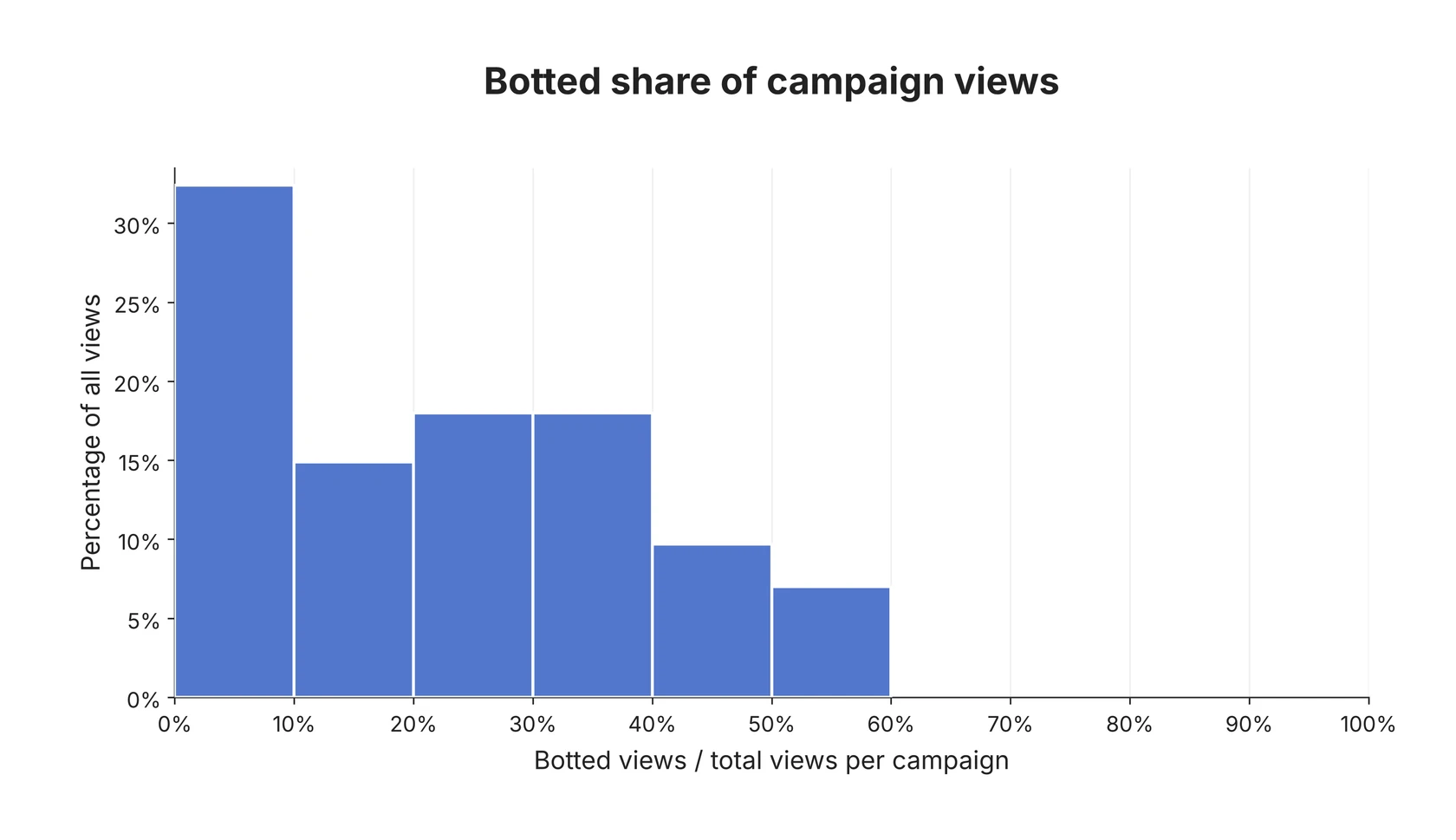
The uncomfortable part is that most clipping agencies don't fully grasp how deep this goes. Most run on trackers and detection systems that are trivially easy to route around. The going rate for fake views is roughly $0.006 per 1,000 views, against an average campaign payout of $1-2 per 1,000 real views. Add in cheap likes (about $0.04 per 10) and a botter can make 20-40x their money on a single campaign, often without anyone checking.
Here's a photo from inside one of the many organized botting groups:
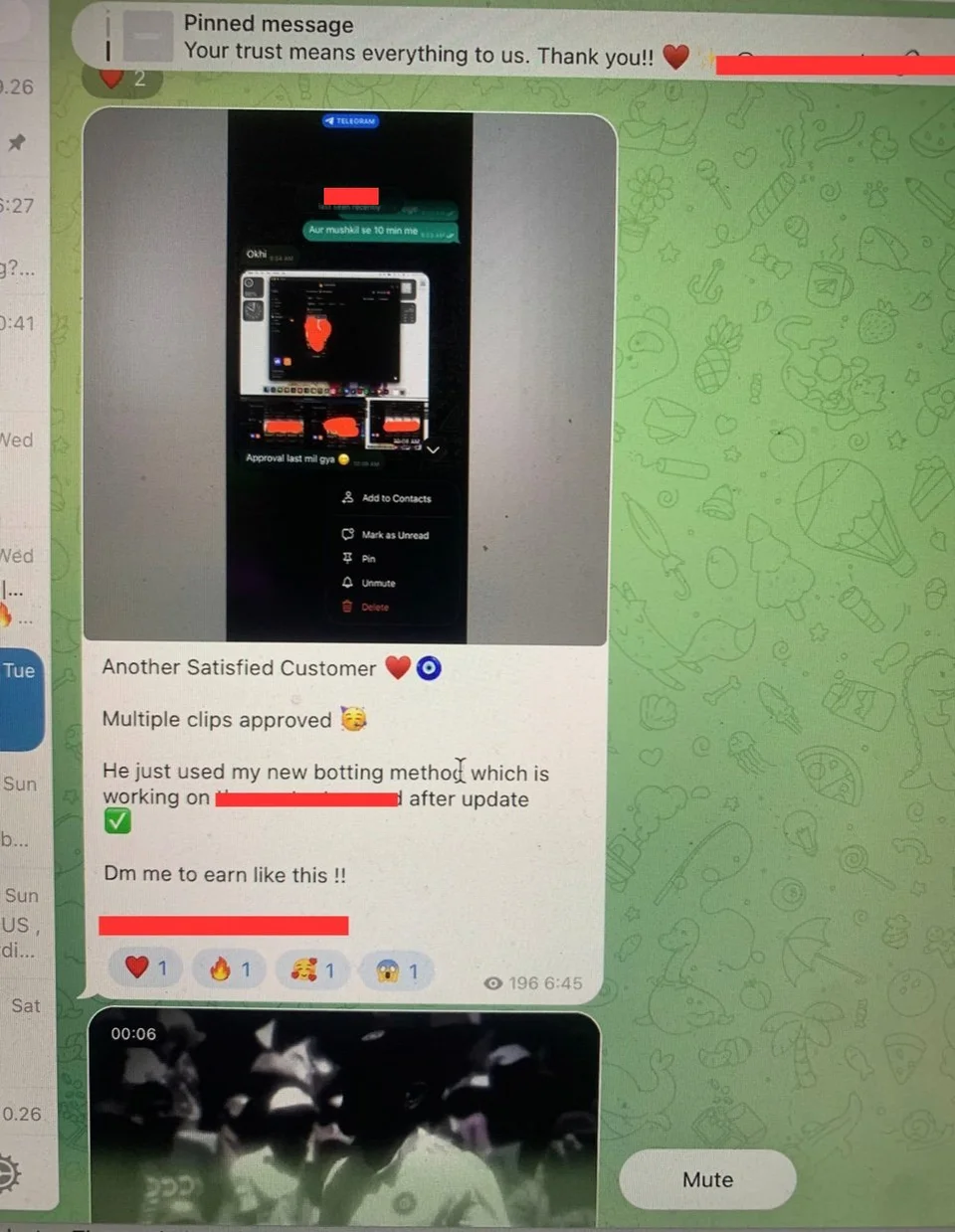
If the math stays this favorable, it doesn't stay a niche problem. Once the biggest spenders realize that a meaningful share of their budget is funding bots instead of viewers, and that the industry isn't doing anything about it, the natural response is to pull out before the space fully matures. That could send clipping into a multi-year trust recession.
So, Is Clipping Doomed?
No! But it has reached the point every emerging media channel hits eventually. SEO, programmatic display, and influencer marketing have all gone through similar pains. As money rushes in, so do scammers, black hats, and opportunists. Gold rushes are as old as markets themselves, and the pattern repeats: if no one builds a trusted foundation for big spenders to stand on, the whole thing can collapse under its own fraud.
That's the gap Evangelist exists to close. We built a third-party verification platform that brands can actually trust. We've trained our industry-leading anti-fraud technology on hundreds of thousands of posts to identify fake and botted views with an unmatched level of accuracy. The result: brands pay only for real views, and see a more significant, measurable lift than when clipping campaigns run unchecked.
Clipping isn't doomed. Unverified clipping is.
FAQ
What is a clipping campaign?
A marketing campaign where creators are paid to cut and repost a brand's content as short clips, typically compensated per thousand views.
How much of clipping campaign traffic is fake?
Our data puts it at roughly 5-40% of total views across a typical campaign, depending on how well the campaign is monitored.
Is clipping better than paid ads?
In some ways it is: clipping avoids the testing budget ad campaigns require, since it targets audiences the algorithm has already matched to the content. But the two aren't competitors; they're complementary. Clipping doubles as a low-cost discovery layer. Because clips already circulate organically, you can see which ones the algorithm rewards before you spend a dollar on ads. Put the paid budget behind those proven winners, and you skip the guesswork paid campaigns usually pay for in testing.
How can brands avoid bot views in clipping campaigns?
Before launching a clipping campaign, make sure your provider has built out, or partnered with, third-party verification. Otherwise you risk inflated view counts, wasted spend on bot traffic, and no reliable way to prove which clips actually drove results.
Ready to stop paying for bots? Find out how Evangelist verifies your next clipping campaign.